SMALL BUSINESS BOOKKEEPING

Small business bookkeeping without the accounting homework

Bonnie keeps a small business's books current week by week: transactions come in from your bank, get categorized, and roll up to a P&L you can hand to an accountant or lender — while you answer only the questions an owner can answer.

BUILT FOR

Owners and lean teams Bonnie fits

  • Solo owners, contractors, consultants, agencies, and lean teams without a bookkeeper on payroll.
  • Businesses in shoebox mode — transactions everywhere, no reliable rhythm.
  • Owners who'd rather answer a few questions a week than sort every transaction themselves.
A MONTH WITH BONNIE

What the rhythm looks like

  • During the month: transactions import and categorize automatically; you answer the handful Bonnie flags.
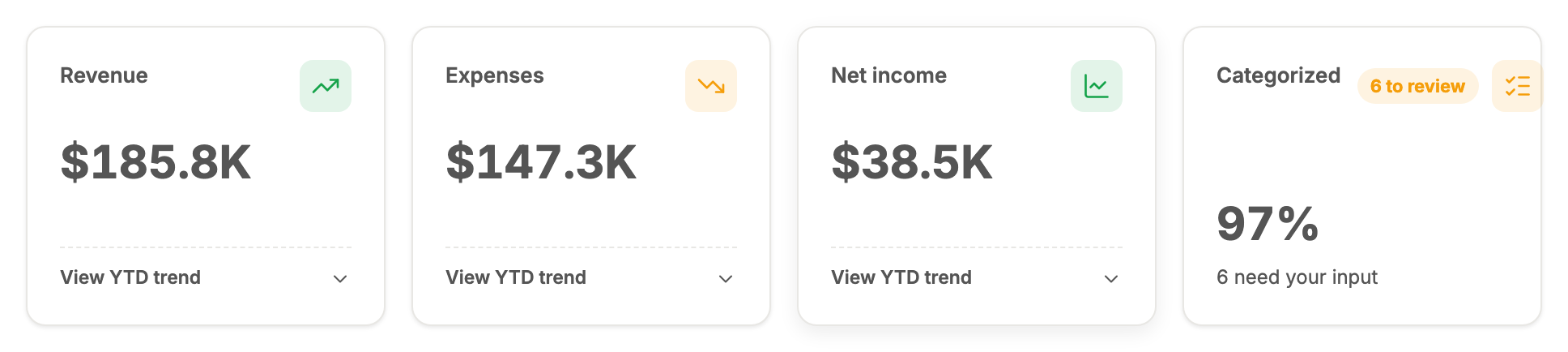
  • Any time: open the dashboard and see where the month stands — revenue, expenses, net income.
  • Month end: export the P&L to CSV or PDF for your accountant, lender, or business partner.

YOUR MONTHLY RHYTHM

How the month actually runs

Activity flows in.

Connected accounts pull transactions in through Plaid — no exports, no re-keying. Prefer not to connect a bank? Upload statements and Bonnie works from those instead.

Documents file themselves.

Upload receipts and statements as you get them (PDF, photo, or CSV); Bonnie matches them to the transactions they back up and keeps them stored for three and a half years.

You answer real questions.

Instead of sorting a month of transactions, you answer things like “this Amazon charge could be office supplies or small equipment parts — which fits better?” Once. Bonnie remembers.

The books stay handoff-ready.

Your P&L is current all month, every line opens to its transactions, and exports are one click when someone needs your numbers.

Bonnie dashboard cards showing revenue of $185.8K, expenses of $147.3K, net income of $38.5K, and 97% of transactions categorized with 6 needing review
Where the month stands, at a glance: revenue, expenses, net income, and how much is already categorized. From Bonnie's live demo — sample books for a harborside lobster shack. Try it yourself at mybonnie.ai/demo.

OWNER EXPERIENCE

You answer the judgment calls. Bonnie handles the flow.

The decisions stay yours: Was this vendor business or personal? Is this transfer just money moving between accounts? Should this recurring charge keep following last month's category? Bonnie asks in plain English, posts it the way you decide, and keeps your answer on the record.

WHAT IT COSTS

Bookkeeping-service results at software pricing

Bonnie is $15/month or $150/year, with a 30-day free trial. Published entry prices for outsourced bookkeeping services run $199–$599/month — Bench starts at $199, Pilot's bookkeeper plan at $299, Bookkeeper360 at $399 (all list prices, July 2026) — often plus onboarding fees. Bonnie has no setup fee and no contract.

Sources: Bench pricing · Pilot pricing · Bookkeeper360 pricing

FAQ

Questions owners ask

Is Bonnie bookkeeping software or a bookkeeping service?

Both, in practice. You get service-style results — categorized books, filed documents, a current P&L — but software does the work, at software pricing ($15/month), with you answering the same questions a human service would email you anyway.

What does small business bookkeeping cost?

With Bonnie, $15/month or $150/year after a 30-day free trial. Hiring help costs more: published outsourced-service prices start around $199–$399/month (Bench and Bookkeeper360, July 2026), and the median U.S. in-house bookkeeper earns $50,670 a year (Bureau of Labor Statistics, May 2025).

What do I need to get started?

A business bank or card account you can connect through Plaid — or statements you can upload as PDF, image, or CSV. Receipts and invoices help Bonnie match documents to transactions, and you can add them as you go.

Ready for cleaner books?

Start with Bonnie and turn bank activity, receipts, statements, and owner context into bookkeeping you can review.

Get started